
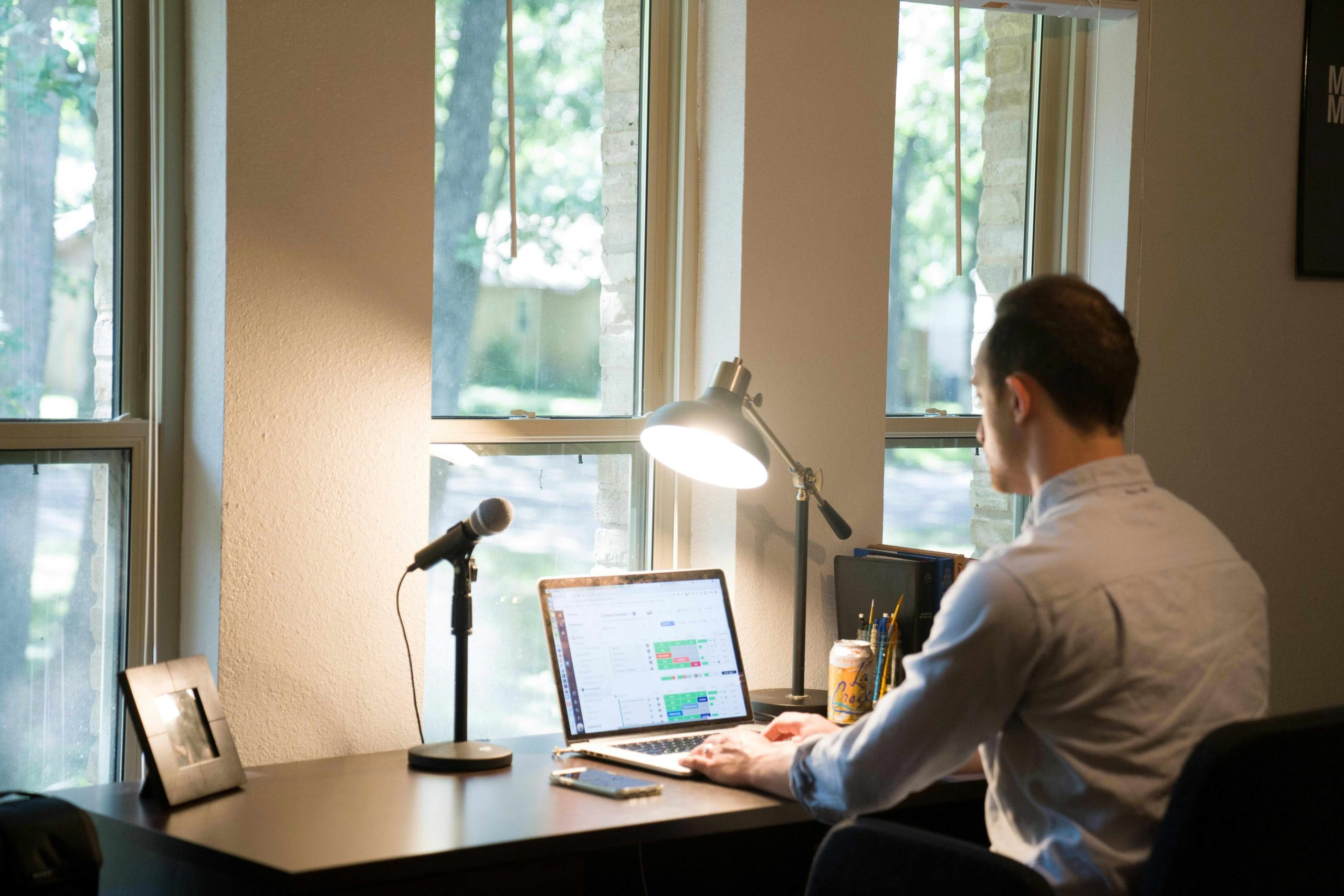
 Photo by Ian Harber on Unsplash
By Dean Burgess, Excitepreneur
When millions began working from home, few realized that the shift might quietly redefine our personal relationship with the planet. Commuter traffic thinned, cities grew quieter, and households began humming with a different kind of energy demand. Today, as hybrid and fully remote work become the norm, the environmental consequences—both positive and complex—are coming into focus.
Key Takeaways at a Glance
- Remote work drastically reduces daily commuting emissions but increases home energy usage.
- Household electricity and heating patterns now shape individual carbon footprints more than travel.
- Paperless workflows and digital tools can meaningfully cut waste.
- Eco-friendly home offices multiply the benefits of remote work when combined with renewable energy and efficiency upgrades.
- Sustainability is not automatic—it depends on conscious personal choices.
The Double-Edged Carbon Equation
For decades, the daily commute defined personal carbon impact. When workers stayed home, emissions from cars and public transit fell dramatically. Global data from 2020 onward shows a drop in urban air pollution and vehicle-related CO₂ emissions—proof that remote work can shrink our collective footprint.
Yet this story has a second half. Home offices consume more electricity and heating fuel. The energy once centralized in office towers now spreads across millions of homes, often powered by less efficient systems. The environmental outcome depends on how each worker manages their home energy ecosystem.
Digital Minimalism: The New Paperless Revolution
Every document we print carries hidden environmental costs—paper production, ink, and transport all leave a trace. By shifting to digital workflows, remote workers can make tangible progress toward lower waste.
Creating, editing, and archiving files digitally eliminates the need for storage closets full of binders and printouts. Saving documents as PDFs provides a consistent, secure format that works across platforms while preserving quality. If you need to make changes, you can easily use a PDF editor to update content without reprinting or rescanning. Over time, these micro-choices help reduce things like paper waste.
Everyday Sustainability: Small Habits, Big Impact
A few daily decisions can determine whether remote work becomes a green revolution or merely a comfort upgrade. Here are practical strategies that make a measurable difference:
- Unplug idle electronics and chargers at the end of each workday.
- Use power strips or smart plugs to monitor and manage consumption.
- Opt for natural lighting where possible; position your desk near a window.
- Adjust thermostats during non-working hours.
- Recycle outdated tech responsibly and buy refurbished gear when possible.
Sustainability starts at the outlet and extends to every lifestyle choice in your home office.
How-To Checklist: Building a Greener Home Office
Before you assume your remote setup is “eco-friendly enough,” take a structured approach. Run through this checklist to measure your sustainability performance:
- Audit your energy mix – Are you using renewable power through your local utility or rooftop solar?
- Optimize your workspace lighting – Switch to LED bulbs and make use of natural daylight.
- Reduce heating and cooling waste – Seal windows, use programmable thermostats, and work in smaller spaces when possible.
- Buy responsibly – Choose Energy Star–rated equipment and furniture made from recycled materials.
- Adopt digital-first habits – Replace printing with e-signatures, cloud sharing, and digital archiving.
- Offset what remains – Consider verified carbon offsets for unavoidable emissions.
Education as Environmental Leverage
The ability to work and learn remotely opens new pathways to low-carbon growth. Pursuing education online not only reduces commuting emissions but also trims the energy footprint of physical campuses—lighting, heating, and maintenance.
Professionals looking to expand their leadership potential can earn a business management degree online, gaining valuable skills in operations, sustainability, and strategic planning. These programs combine career growth with environmental responsibility, making learning both accessible and eco-efficient.
Comparing Energy Trade-offs
To understand how remote work reshapes personal sustainability, it helps to view the balance sheet of energy gains and losses.
| Environmental Factor | Office-Based Work | Remote Work (Typical) | Net Effect |
| Daily commuting fuel use | High (car/bus/train) | Near zero | Major reduction |
| Office building HVAC and lighting | Centralized but efficient | Distributed, variable efficiency | Mixed |
| Home electricity use | Minimal daytime draw | Increased by devices and lighting | Moderate increase |
| Paper and printing | Frequent physical output | Mostly digital files | Reduction |
| Food & single-use waste | High (cafeterias, packaging) | Lower, home-prepared meals | Reduction |
Green Tech as the New Office Supply
Remote workers are increasingly investing in low-impact technologies—solar chargers, energy-efficient laptops, and smart thermostats. These upgrades pay off in both comfort and conscience. Many utilities offer rebates for efficiency improvements, making the transition affordable and practical.
The environmental frontier now lives not in corporate skyscrapers but in our homes. Each worker becomes an independent sustainability manager.
The “At-Home Planet” FAQ
Curious about how your home office choices? Here’s what people ask most often.
- Does working from home automatically lower my carbon footprint?
Usually yes, but it depends on your commute distance and your home’s energy efficiency. If you drove long distances before, the carbon savings can be dramatic. However, heating a large home office inefficiently can offset those gains. - Is using air conditioning while working from home worse than driving to an office?
Not necessarily. It’s about duration and system efficiency. A high-efficiency unit cooling one room uses less energy than a daily commute in a car. - How can I tell if my electricity is clean or renewable?
Check your utility bill for renewable energy options. Many providers let you buy a share of solar or wind generation directly. - Do video calls significantly increase my carbon footprint?
Streaming and conferencing use energy, but the impact is minor compared to physical commuting. Lower video resolution when quality isn’t essential to reduce data transmission energy. - Are paperless offices truly sustainable?
Yes—especially when paired with long-term digital storage and minimal device turnover. Paperless workflows drastically cut water and chemical use tied to paper production. - What’s the single best upgrade I can make?
Switching to renewable electricity or improving home insulation offers the biggest payoff, reducing emissions year-round.
Home Is the New Climate Frontier
Remote work has rewritten the geography of sustainability. Our homes have become micro–climate systems where choices about lightbulbs, laptops, and lunch matter as much as policies and pipelines. The future of eco-conscious work won’t be decided in downtown skyscrapers—it will unfold in millions of home offices, one efficient decision at a time.
As we refine how and where we work, the environmental equation becomes personal—and that’s where lasting change begins.